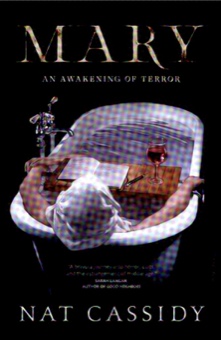
Mary by Nat Cassidy
read: April 23, 2026 - May 5, 2026
★★★☆☆
There was a lot to admire about this novel: a unique protagonist, well established atmosphere, and a smart emotional core about feeling invisible, discarded, and unsure of oneself. Mary’s unraveling has plenty of texture and these things alone make it worth reading.
With that said, by the time the story tipped into its bigger, crazier revelations, I felt more distanced than shocked. I think this novel needed a trim. I liked the ideas and appreciated what Cassidy was going for, but the execution was overstuffed.
I plan to read more Nat Cassidy in the future!
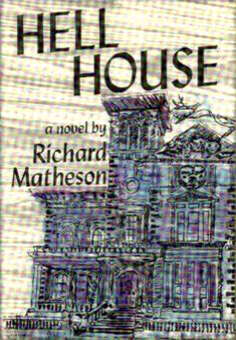
Hell House by Richard Matheson
read: April 14, 2026 - April 23, 2026
★★☆☆☆
Despite being a longtime Matheson fan and proud owner of a signed collection of his Twilight Zone scripts, I somehow never got around to Hell House until now (queue exaggerated sigh).
What should've been a tense, classic haunted house story instead felt like a strangely horny Scooby-Doo episode. The gratuitous "sexual shock tactics" simply haven't aged well, though I don't think that's Matheson's fault necessarily. Hell House's horror leans heavily on 1970's anxieties around sexual liberation where deviation is treated as inherently corrupting and borderline monstrous.
But from a modern perspective, the novel's reliance on these tropes undercuts any genuine sense of dread. The novel's ending- which surprisingly had very little to do with any of the above came off as surprisingly silly in a way that deflates all the previous buildup the novel worked so hard for.
Hell House was a rare miss from an author I otherwise admire.
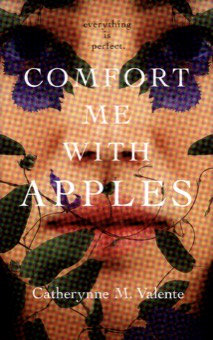
Comfort Me with Apples by Catherynne M. Valente
read: April 13, 2026 - April 15, 2026
★☆☆☆☆
I was told by a friend to go into this novella blind, so I did. I usually love doing that, but this time I got burned.
Who is shelving this as horror? This is dark romantic fantasy. Not my thing. Oh well, fortunately it's a quick read.
Basically, the author took The Stepford Wives and mashed it up with a Genesis fan-fic with a "what if Adam were an incel?" angle. The concept isn't entirely uninteresting (the novella has plenty of great reviews, after all) but the execution felt overly self-satisfied. It didn't work for me, though I can see this landing better for readers who enjoy this genre and don't mind its heavy-handedness.
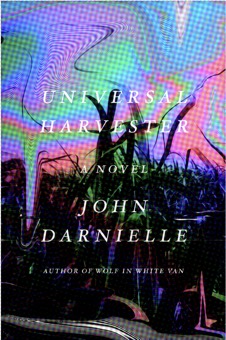
Universal Harvester by John Darnielle
read: April 7, 2026 - April 13, 2026
★★★☆☆
Now where have I read prose and structure like this before... I didn't realize this was the same author as Devil House (which I gave a 2/5). Universal Harvester is getting a 3rd star from me and while I really, really want to give it a fourth, I just can't.
First of all, Universal Harvester is marketed as horror and even though its set up like a found-footage horror... it's not. It's a psychological drama about grief. Devil House did something like this too. You'd think a book called Devil House would be horror, huh? Fool me twice, John Darnielle!
Clearly, Darnielle has a way of getting me to buy his books. I love the way he writes. I love the atmosphere he builds, and I love his characters. It's undeniable that he's an excellent writer, but he's always missing... something.
So if the premise is interesting, the writing is great, and the atmosphere is superb, what's my problem? Well, just like Devil House, the story that's told never quite knits together in a satisfactory way. It's moody and hazy and I kept waiting for something to click into place, but it never really did. I can see what it's going for, but I'm left with more questions than I'm comfortable with. I don't mind ambiguity (I'm pointing toward the heavens at you, David Lynch!) but this novel leaves so much unresolved that I'm not sure what to do with it all.
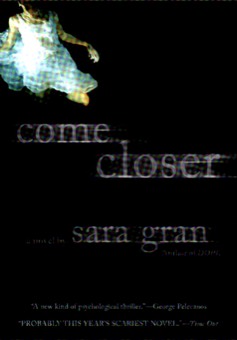
Come Closer by Sara Gran
read: April 3, 2026 - April 7, 2026
★☆☆☆☆
This one's a bit of a headscratcher.
It feels like the author started with a strong premise, mapped out (arguably) compelling story beats, and then rushed through a first draft at lightning speed, forgetting to flesh out the actual story, its stakes, and characters.
I can see what the book is getting at. There's an obvious undercurrent of female rage pushing against societal expectations and constraints - and that's all well and good - but while that theme is beaten over the reader's head, the tension and stakes never are. Nothing that happens to the main character feels truly consequential despite all her "bad behavior." I never found myself worried about her or her situation, let alone any of the other characters.
It doesn't take much digging through other reviews here to see that plenty of readers had a similar reaction. So why all the glowing praise? I'm not entirely sure. It may simply resonate more with readers who aren't looking for the same depth or development that I am in a novel.
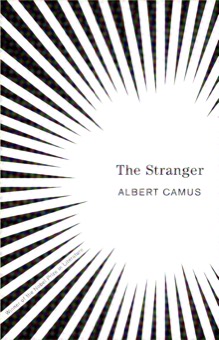
The Stranger by Albert Camus
read: March 31, 2026 - April 5, 2026
★★★★★
"I hope the dogs don't bark tonight. I always think it's mine."
I found it interesting how Meursault begins by claiming it makes no difference whether he lives in Paris or Algeria- he says "one life is as good as another"- but this indifference of his fractures during his trial when something as small as the distant sound of an ice cream vendor's trumpet stirs a sudden yearning for the life he had previously dismissed.
This contradiction is echoed in Salamano and his dog Salamano somehow resents his dog for always being there only to miss him once he's gone. In the same way, Meursault drifts through life detached, yet eventually recoils at the prospect of losing it.
When I finished reading this book, I didn't know how to feel (ironic, huh?) but after sitting with it a little while after, it is clear to me that this is a 5/5.
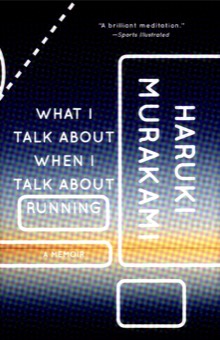
What I Talk About When I Talk About Running by Haruki Murakami
read: March 30, 2026 - April 2, 2026
★★★★★
As someone new to Murakami (having only read The Strange Library) I found this book to be an excellent entry point into his mind. It's a delightful slice-of-life memoir.
Murakami reflects on endurance, aging, and the parallels between long distance running and the writing process. I liked spending time inside his head.
While it may not be essential reading for everyone, as someone interested in both writing and running, I found it to be a wonderful read and have no reason to give it less than 5/5.
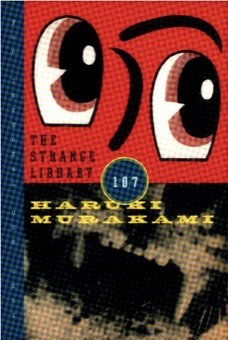
The Strange Library by Haruki Murakami
read: March 29, 2026 - March 29, 2026
★★★★★
This book was an absolute delight to read, but what does it all mean?
I won't even try to answer that, but what I will say is that The Strange Library rewards multiple readings. Symbols move like sheep: scattered at first, strange and wandering, urging you to gather them, guide them, assemble something of them or else they will go completely bananas.
I think I've managed to herd a few of them together, but like the boy, I can't be certain.
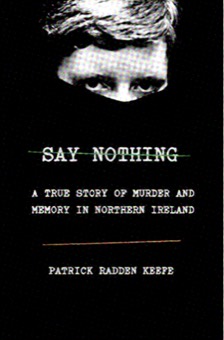
Say Nothing by Patrick Radden Keefe
read: March 17, 2026 - March 29, 2026
★★★★★
This completely hooked me.
Say Nothing is a true crime, whodunit-style nonfiction that reads with the intensity of a thriller. Patrick Radden Keefe's storytelling is immersive, tense, and deeply human.
What begins as a woman's disappearance expands into a gripping exploration of the Troubles, revealing the complexities and moral gray areas of political violence in Northern Ireland.
This is one of those rare books that's as informative as it is impossible to put down.
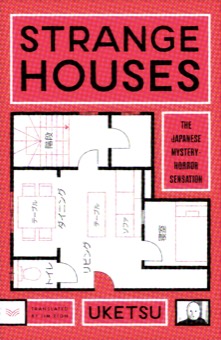
Strange Houses by Uketsu
read: March 26, 2026 - March 28, 2026
★★☆☆☆
This concept is genuinely unique and I was hooked for the first quarter of the novel.
I enjoyed trying to piece things together for myself. The floor plan elements were fun. Unfortunately, as the novel progressed, the story became over-explained and all sense of mystery faded away for me.
I found it harder and harder to suspend my disbelief while reading. The book asks a lot from the reader, including your willingness to go along with increasingly far-fetched theories that characters arrive at with unbelievable confidence and correctness. The protagonists rarely make mistakes and there's very little at stake for any of them.
The floor plan elements were fun, but in the end, the story was over-explained and the sense of mystery was erased. Instead of discovering things for yourself, everything is neatly spelled out.
The writing style also struck me as elementary and I initially assumed this book might be YA fiction- perhaps explaining why so much of it is explicitly spelled out. As it turns out, the translator's notes confirm that the writing style was an intentional choice to broaden the audience to include younger readers. I'm not sure I would've picked this up had I known this.
The repetitive and exaggerated dialogue ("What?!" "What did you say?!") felt unnatural. One talks like that. I ultimately chalked it up to the quirks of translation, or at least that's what I kept telling myself.
Overall, it started as a fun read, but by the end it felt like a slog. The mystery lost its pull, and what remained felt more like a family drama than a horror story. Fortunately, it was a quick enough read.
Pure Cosmos Club by Matthew Binder
read: March 13, 2026 - March 26, 2026
★★☆☆☆
The novel's premise felt right up my alley and I loved the surreal humor early on. However, about halfway through, I realized I was reading a slapstick sitcom, where each chapter loosely follows the last but largely seems to "reset" Paul into a new disconnected situation.
As it continued to progress in this fashion, it became clear to me that meaningful character development wasn't a priority. Compounding on this, the titular cult plays only a marginal role for much of the book- not appearing in any substantial way until very late. By then, I was too disengaged to care about the characters' outcomes, largely because they were never given the depth to make me invest in them in the first place.
It hurts to give this one a 2/5, but with that said, I'll be keeping an eye on this author. There was a compelling idea at this story's core and with a bit more restraint and focus, it could have been something truly special.

You Should Have Left by Daniel Kehlmann
read: March 16, 2026 - March 17, 2026
★★★★★
This is a wonderfully upsetting novella. It's incredible how much Kehlmann accomplishes in so few pages.
I listened to the audiobook, which was beautifully narrated, but I'll be picking up a physical copy as well. The way it's written feels like it would lend itself better to reading than listening.
Invisible Monsters by Chuck Palahniuk
read: March 12, 2026 - March 15, 2026
★★☆☆☆
I had a hard time rooting for anyone in this novel. All the character were so unlikable that it kept me from being truly invested.
I'm sure this was Palahniuk's point, but for me, it made my reading experience feel detached, like I was watching a recap of a train wreck.
I guess I just wanted to be inside the train.
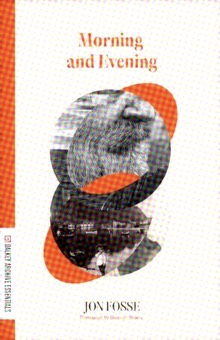
Morning and Evening by Jon Fosse
read: March 9, 2026 - March 11, 2026
★★★★★
As you spend more time with an author, you start to recognize their rhythms, style, and voice. Jon Fosse is unmistakable, and I couldn't love it more. That's probably why I keep coming back to his work.
Told in two brief "scenes," Morning and Evening is barely over 100 pages, yet it hits you hard before you even have time to settle in.
And then it ends, leaving you right where you started. But somehow, you're different.
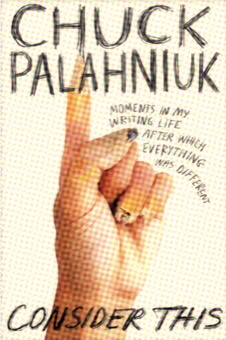
Consider This by Chuck Palahniuk
read: March 7, 2026 - March 11, 2026
★★★★★
The craft advice is solid but familiar if you've read as many writing books as I have. What makes this a five-star read are Palahniuk's anecdotes. They kept me chasing the next page.
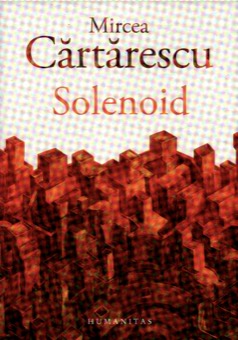
Solenoid by Mircea Cărtărescu
read: February 3, 2026 - March 8, 2026
★★★★☆
If you're the kind of reader who wants to find themselves suspended in pure, high-octane surrealist atmosphere and beautifully poetic language, there's a very good chance you're going to love Solenoid. It's mesmerizing.
With that said, I did feel the book was bloated. The biggest issue for me is that it didn't really offer much in the way of plot or character stakes. Even large, difficult novels like Gravity's Rainbow or Moby Dick still have an underlying narrative engine, however distorted or fragmented they may be. Solenoid largely does not. There is conflict, yes, but it arrives late and never felt urgent or gripping to me.
Solenoid is an incredible achievement, and while I think I'll carry parts of it with me for the rest of my life, I can't say it's a novel I'd be able to recommend to many people.
If you're looking for a strong sense of plot or stakes, this may not be the book for you. But if you're willing to let yourself drift through a strange, hypnotic, language-driven aether, then this is absolutely worth your time.
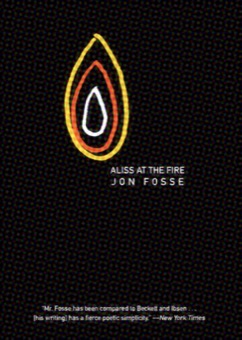
Aliss at the Fire by Jon Fosse
read: January 18, 2026 - February 3, 2026
★★★★☆
Aliss at the Fire is a quiet meditation on loss and return. Throughout our lives, we will constantly find and lose pieces of ourselves and those around us.
Fosse captures this rhythm with his usual hypnotic prose. There's a sense that some things can be recovered, revisited, or remembered into presence, while others are gone in a way that can never be brought back. It's a simple story on the surface, but it lingers in that familiar, unsettling way Fosse does so well.
With that said, this is not a light or easy read. It's a short book that will demand your full attention.
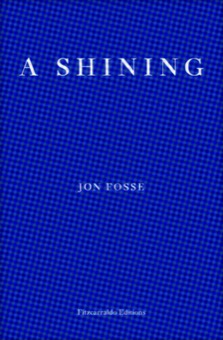
A Shining by Jon Fosse
read: January 21, 2026 - January 23, 2026
★★★★☆
This was my first Jon Fosse, and I can immediately see why he's polarizing.
A Shining follows a man stranded on a forest road whose journey into the trees becomes something strange, luminous, and deeply introspective. The narrative drifts between reality and something a little more more elusive. It touches upon memory, longing, and the limits of human understanding. It's ambiguous in a way that feels both unsettling and familiar, asking you to surrender to the experience rather than fully understand it.
I found it to be a rewarding and intriguing read from a clearly gifted author.
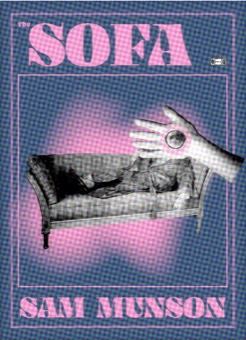
The Sofa by Sam Munson
read: January 5, 2026 - January 8, 2026
★★★★☆
"What are you reading?" someone asks. I tilt the cover toward them.
"What's it about?" they follow up.
"It's about a family that comes home one day and their sofa is different."
But this novel isn't about the sofa. It's about what happens when something small and inexplicable upends everything. I can see why this might frustrate some readers, but for me, that's part of the appeal. You have to be willing to surrender to the inexplicable, much like with a David Lynch film, and just let the experience wash over you.
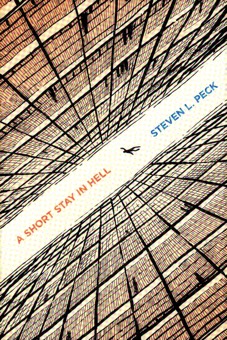
A Short Stay in Hell by Steven L. Peck
read: March 18, 2025 - March 19, 2025
★★★★☆
A very accessible entry into existentialist horror.
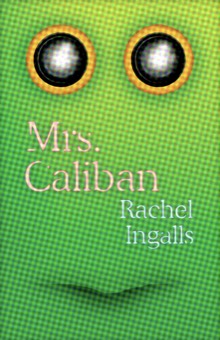
Ms. Caliban by Rachel Ingalls
read: November 25, 2025 - November 26, 2025
★★★☆☆
If you're interested in forbidden romance and avocados, then this is the book you've been looking for!
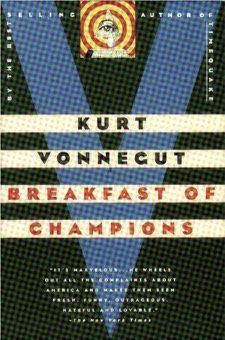
Breakfast of Champions by Kurt Vonnegut
read: November 18, 2025 - November 20, 2025
★★★★☆
A lovely bunch of nonsense.
Room to Dream by David Lynch & Kristine McKenna
read: October 1, 2025 - November 6, 2025
★★★★★
There's honestly nothing I can say that will convince someone to read Room to Dream.
If you're interested in David Lynch - his life and his work - you'll pick this up. If you're not, you won't.
What the book ultimately reinforces is that there will never be another David Lynch. He was completely singular.
More than anything, it reads like a testament to that kind of creative freedom, the kind most people admire but rarely ever allow themselves to pursue.
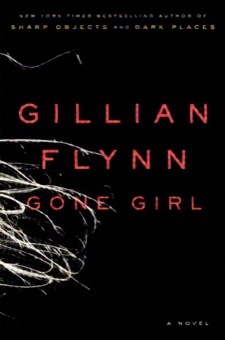
Gone Girl by Gillian Flynn
read: May 2, 2025 - May 16, 2025
★★☆☆☆
"Have you read Gone Girl?" was a question I was asked all the time, and my answer was always "no," so I finally decided to change that and it was... okay.
I saw someone else describe it as "a good thriller if you leave your brain outside the door," and that feels about right. It's entertaining enough to keep you wondering how Flynn was going to wrap this all up, but it didn't stick with me long after I finished.
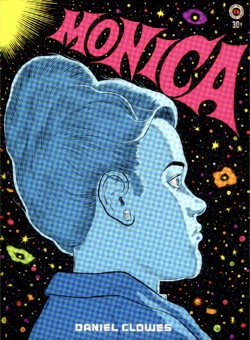
Monica by Daniel Clowes
read: May 4, 2025 - May 6, 2025
★★★★☆
Go into this graphic novel cold. Let it take you away somewhere. What a ride.
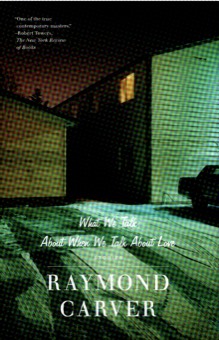
What We Talk About When We Talk About Love by Raymond Carver
read: April 24, 2025 - April 28, 2025
★★★★★
If you've never read Raymond Carver, then you should. It's as simple as that.
In just a few pages, he illuminates real, gritty human moments that will stay with you for a lifetime.
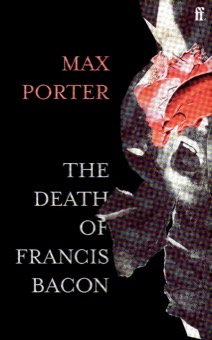
The Death of Francis Bacon by Max Porter
read: April 21, 2025 - April 21, 2025
★★★☆☆
As an admirer of Bacon's art, and someone who's read quite a bit of nonfiction about his life and work, I approached The Death of Francis Bacon with genuine interest. I appreciate experimental writing, so in theory, this book should've hit all the right notes.
But something about it didn't quite land for me. I want to like it, I really do. It has its moments, but as a whole, it felt elusive in a way that left me more detached than intrigued. I'm not sure if it's the form, the voice, or simply the fact that it's more impressionistic than narrative, but whatever it is, the connection never fully formed.
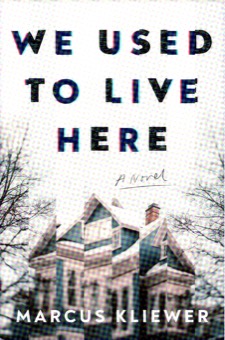
We Used to Live Here by Marcus Kliewer
read: April 10, 2025 - April 18, 2025
★★☆☆☆
As a fan of House of Leaves and the storytelling of David Lynch, I was drawn in by both this novel's premise and its absolutely glowing reviews.
Unfortunately, the writing feels rushed and unpolished. It crams too much into too few pages. The characters are made to make consistently implausible decisions in order to advance the plot.
If this is your first foray into this genre of horror, it might hit harder for you, but to me it felt more like a cheap imitation. For those familiar with the works this novel drew inspiration from, you'll know it reads more like a "Temu" take on House of Leaves by Mark Z. Danielewski.
It's a shame, because with a little more effort and refinement, this could have been a great read.
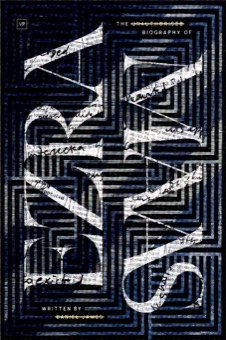
The Unauthorised Biography of Ezra Maas by Daniel James
read: February 5, 2025 - March 13, 2025
★★★★★
A strange, layered novel that blurs the line between fiction and reality, character study and literary puzzle. Told through the recovered notes of a journalist chasing the story of a reclusive artist, it unfolds like an investigation where every answer only deepens the mystery. It's disorienting in the best possible way.
Devil House by John Darnielle
read: July 7, 2022 - July 16, 2022
★★☆☆☆
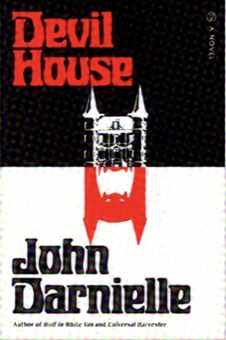
It looks like a true crime thriller, smells like a true crime thriller, but it doesn't walk like one.
A writer moves into a house where a brutal murder took place, but the book quickly abandons that premise for something far more abstract and introspective. It's less about solving a crime and more about storytelling itself - who controls a narrative, and how it changes over time. The author leans heavily into metafiction, layering perspectives and timelines in ways that feel deliberately disorienting. While I understand that this is part of the design, it often felt like the novel was pulling away from the very story it set up.
I picked this up for the premise, but its execution left me frustrated. The pacing is slow, the structure constantly shifts, and there's little in the way of a traditional payoff. The more experimental sections interrupt the narrative flow and felt like big risks that didn't pay off (if you're gonna take those risks, then you gotta really nail it). While I can appreciate the ambition and the strength of the prose, Devil House ultimately reads more like an intellectual exercise rather without a satisfying story.